What does the future look like?
Technical developments can make taxiing more sustainable
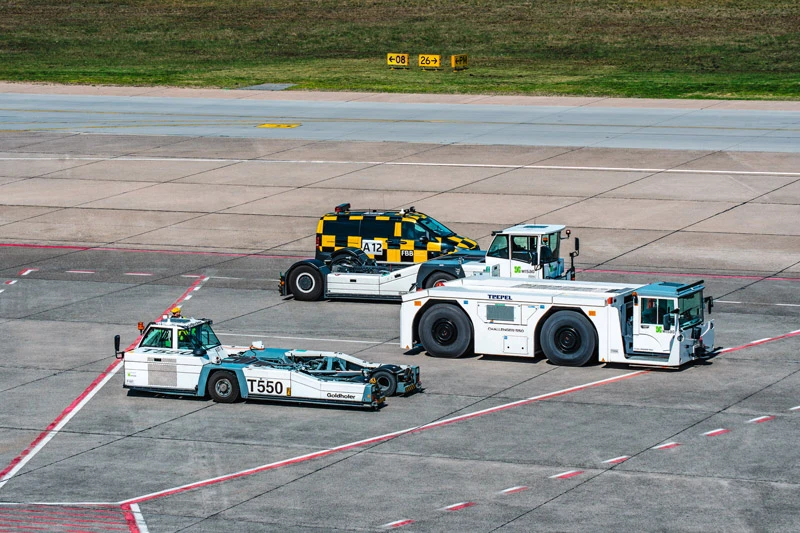
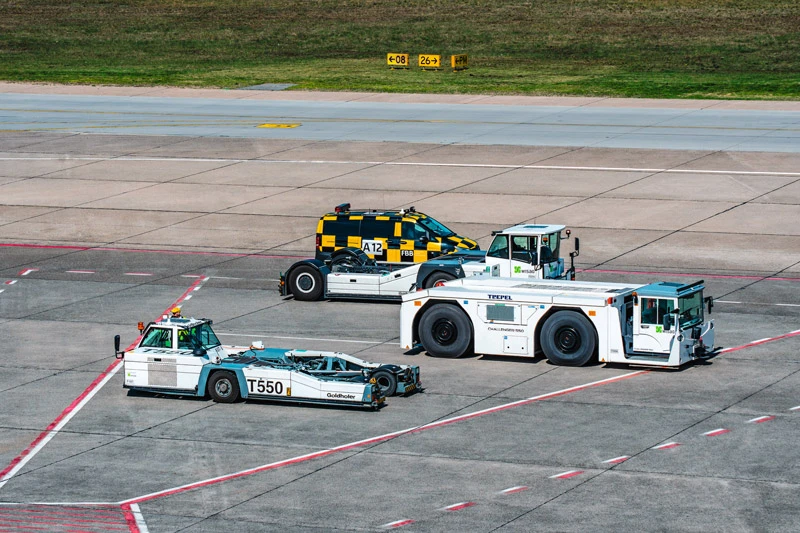
Aircraft engines are optimized for flight, not for slow maneuvers on the ground. So airport operators, airlines, and aircraft and engine manufacturers are looking for new, energy-saving propulsion systems for ground maneuvers. Various concepts for both ground-based and on-board systems have already been developed and, in some cases, tested.
The simplest way to reduce energy consumption in taxiing doesn’t require any additional equipment: in single engine taxiing, or SET, the pilot runs only one of the engines while on the tarmac; all the others go into operation only shortly before takeoff. Estimates suggest that this can cut fuel consumption at the airport by more than 20 percent.
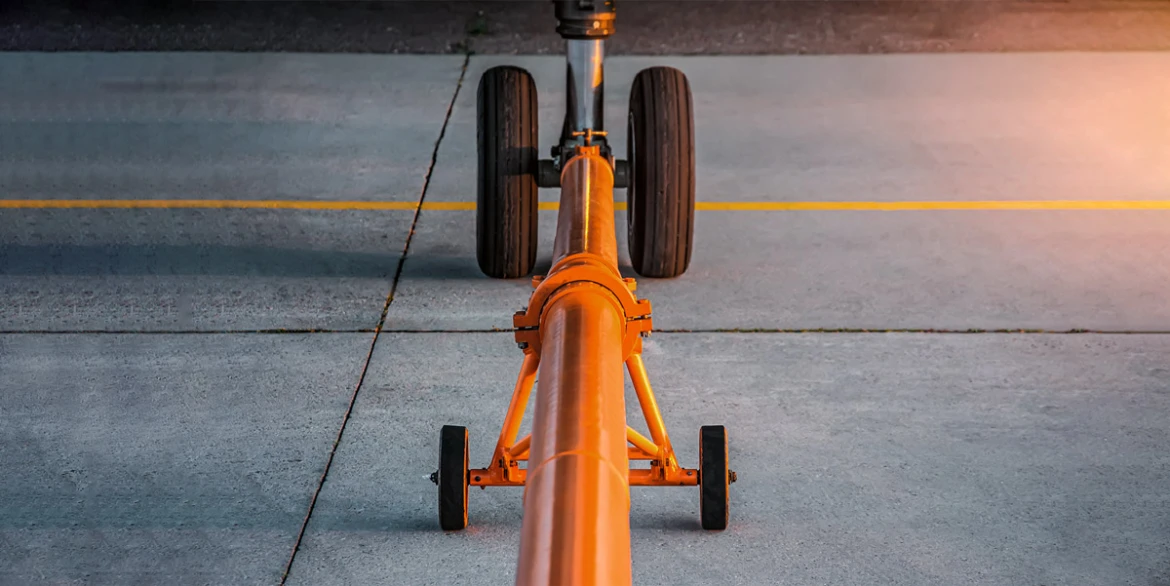
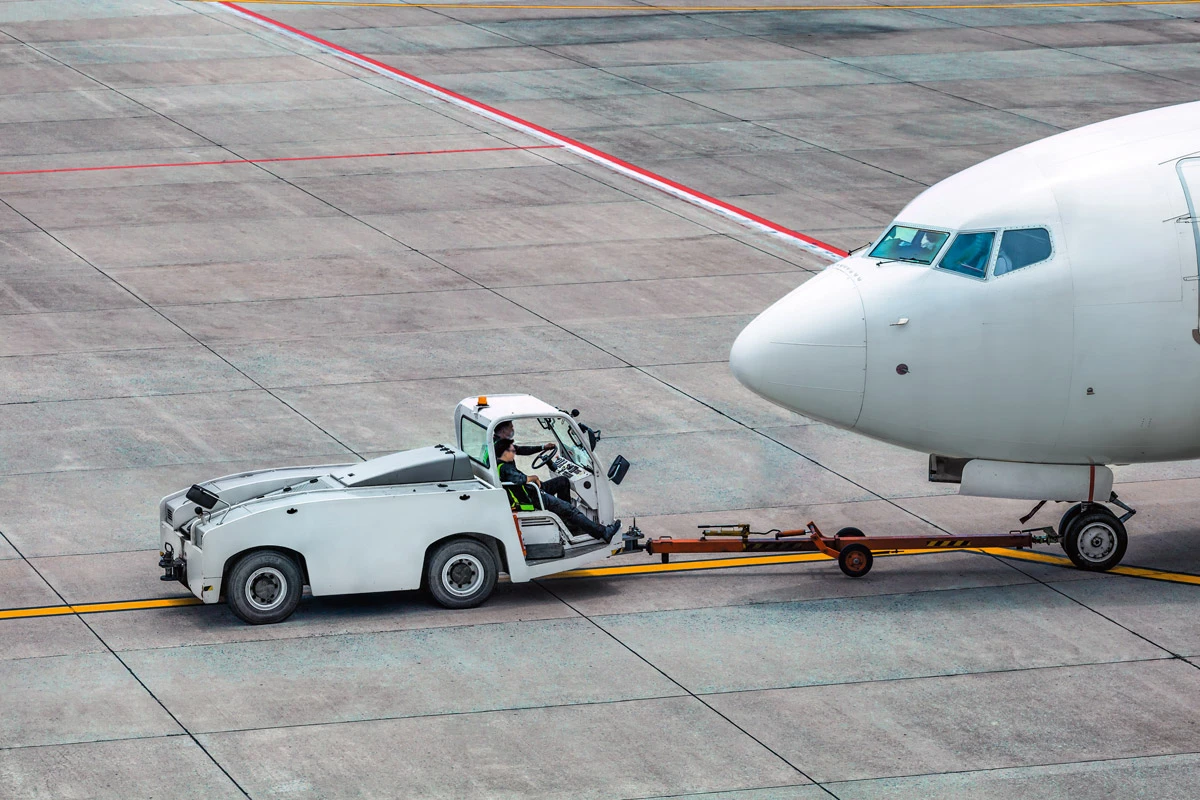
The flagship of the ground-based systems is the TaxiBot, an autonomous aircraft tractor with a hybrid diesel-electric powertrain, which has already been tested at Amsterdam’s Schiphol Airport. A driver maneuvers the TaxiBot backwards to the nose landing gear of the aircraft and docks there. This turns the vehicle into an external propulsion system that the pilot can control from the cockpit. With the help of the TaxiBot, the pilot can now drive to a holding position just before the runway, then switch on the engines for takeoff. This achieves fuel, carbon dioxide and nitrogen oxide savings of over 50 percent.
On-board systems are based on electric motors that could be installed in one or more landing gears. Such e-taxiing systems, or ETSs, would improve aircraft maneuverability, eliminate the need for pushback vehicles and greatly reduce noise emissions at airports. The power needed to operate the electric motors could be generated on board the aircraft either by the existing auxiliary power units, or APUs, or by fuel cells. According to developers, e-taxiing has the potential to reduce emissions of air pollutants by more than half.